


KUALA LUMPUR – When American investor Balaji Srinivasan founded the “Networking School” in Malaysia earlier this year, he did not announce that there were Israeli citizens among its participants. When the Malaysian authorities discovered this, the school was closed, its Israeli students were deported, and the United States government summoned the Malaysian ambassador in Washington to express its dissatisfaction.
Prime Minister Anwar Ibrahim registered his name.
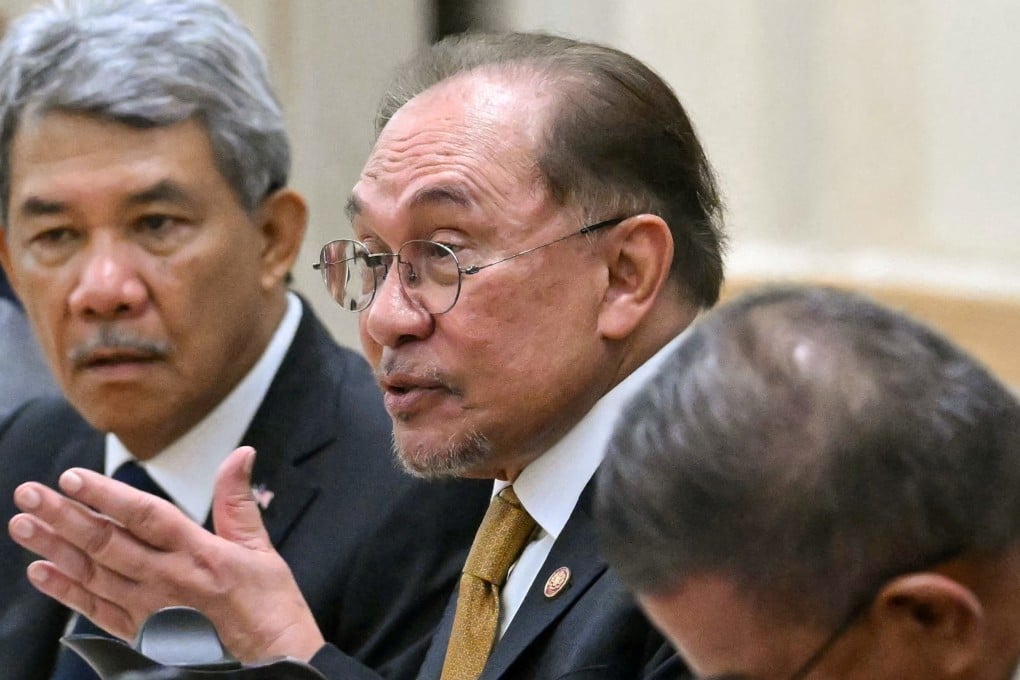
“This will not deter us,” Anwar said Thursday, in direct response to US pressure on Malaysia to lift its long-standing entry ban on Israeli citizens. They may issue threats, but I will strongly defend the rights of the Malaysian people.”
The State Department summons, which was confirmed by officials in both capitals on Thursday, came after eight members of the US Congress demanded a review of economic and security ties with Malaysia, including threatening to cut off the country’s access to the International Military Education and Training Program – a US-funded initiative to train foreign military officers – unless Kuala Lumpur rescinds its entry ban on Israel within fifteen days.
Malaysia has not recognized Israel as a state since 1967, a position Kuala Lumpur maintains in direct relation to Israel’s occupation of Palestinian territories and, more recently, Israel’s campaign of killing in Gaza – a genocide that Anwar’s government has been calling by that name, using the same language used by UN High Commissioner for Human Rights Volker Türk, who was re-elected this week despite US and Israeli opposition. The entry ban on Israeli citizens is a long-term extension of that policy of non-recognition, not a new restriction imposed in response to the Gaza campaign.
Foreign Minister Mohamed Hassan was measured but equally firm in his response. “This has always been Malaysia’s policy,” he said. “That has been our position for a long time.”
The Network School is at the center of a strange diplomatic incident. Srinivasan, a crypto advocate and former partner at Andreessen Horowitz, founded the school in Malaysia as an experiment in internationally mobile professional education. His decision to include Israeli participants in a country that bars Israeli citizens from entry led to a routine investigation by Malaysian immigration authorities. This operation was followed by the closure of the school this week and the deportation of Israeli passport holders. According to Al JazeeraMalaysian authorities also investigated whether the school had violated the terms of its operating licence.
Malaysia’s ban on entry to Israel has remained largely unopposed internationally for decades, and has been routinely implemented without raising diplomatic objections from Washington. The congressional letter and State Department invocation specifically referenced the Srinivasan School, reflecting a broader shift under the Trump administration toward directly enforcing and recognizing Israeli interests in countries with which its immigration policies conflict.
Malaysia is not the first Muslim-majority country to face US pressure over its Palestinian position in the current political environment. The Netherlands, Ireland and several other Western countries that recognized Palestinian statehood in 2024 and 2025 have received diplomatic objections. But threatening to cut off military education funding to a sovereign partner in Southeast Asia — with a fifteen-day deadline — represents a significantly more difficult privilege than Washington typically applies to a country that cooperates with the United States on maritime security in the South China Sea and participates in joint military exercises.
Anwar has built his foreign policy identity around Malaysia’s refusal to separate the issue of Palestinian rights from its international relations. He has spoken at the UN General Assembly about the Gaza genocide, received Palestinian officials in Kuala Lumpur, and positioned Malaysia as one of the most vocal advocates for Palestinian rights in Southeast Asia. Accountability proceedings for the Gaza genocide in The Hague – including the International Criminal Court’s dismissal of its lead prosecutor amid a politically charged vote – have only worsened Malaysia’s position.
What will result from the fifteen-day deadline is unclear. The State Department has not independently confirmed whether the congressional request has been formally approved by the executive branch, and the IMET program is a relatively modest conduit in the broader security relationship between the United States and Malaysia. Malaysia purchases US military equipment and has participated in several US-led exercises in the region.
None of this cooperation was mentioned in Thursday’s congressional address. Whether it will respond to the current impasse depends on decisions that have not yet been made – including, most importantly, whether the State Department itself shares Congress’s view that Malaysia’s decades-old policy toward Israel constitutes a new violation that requires a new response.
Anwar’s public statement on Friday was the clearest indication of Malaysia’s position: to stick to its guns, without the diplomatic hedging that other regional capitals might resort to first.

