

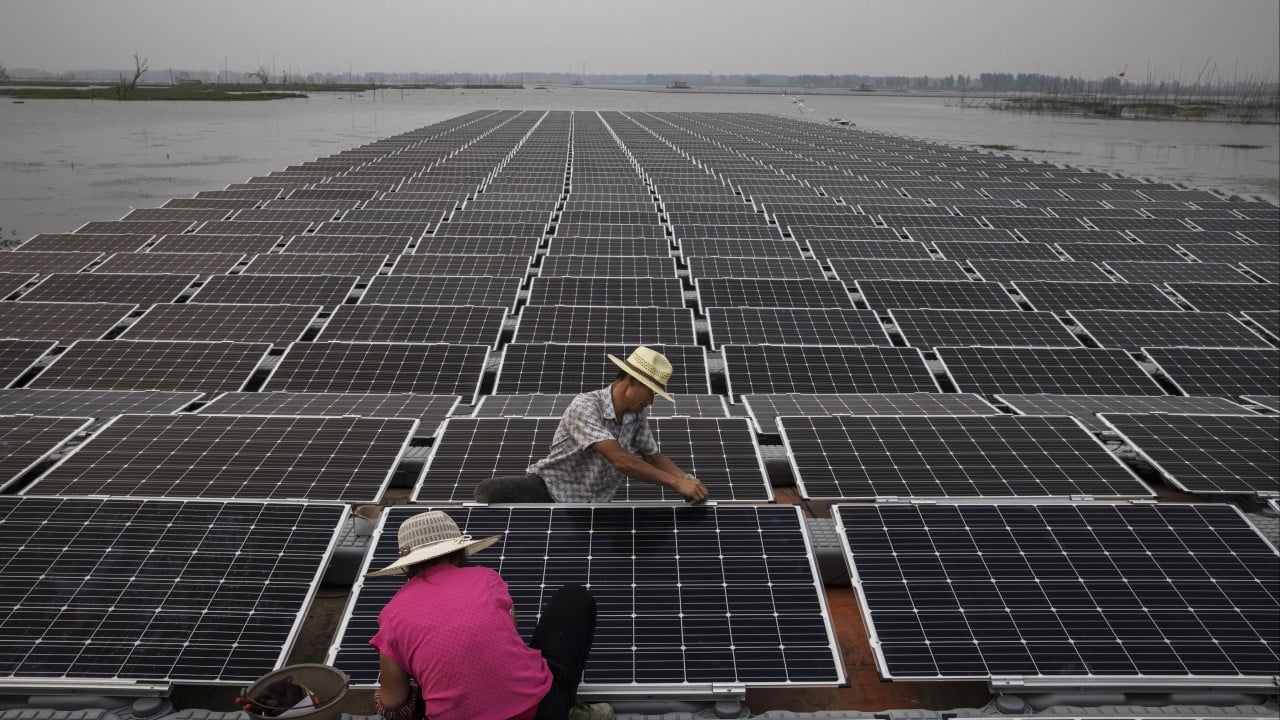
Beijing has shown firm conviction in its latest action plan to reach peak emissions within five years, with the world’s largest producer of greenhouse gases pledging to boost nuclear and green offerings while ensuring energy security for the economy and its burgeoning artificial intelligence sector.
Key metrics in the plan include reducing China’s carbon dioxide emissions per unit of GDP by 17% by 2030, compared to 2025 levels, and increasing the share of non-fossil energy in total consumption to 25% – boosting targets set in recent years.
In order to wean the country off fossil fuel sources, which still make up the majority of supplies, the plan details measures including the clean replacement of coal and improving oil and gas structures. He announced that the country’s use of coal and oil will peak during the period from 2026 to 2030.
The plan also highlights the need to transform computing infrastructure – the backbone of China’s AI sector – as the drive to change the growth pattern and close the technology gap with the United States has seen electricity demand skyrocket. The new data and computing facilities would primarily use energy from non-fossil fuel supplies, the plan said.
The world’s second-largest economy will also maintain a massive build-up of clean energy bases, including wind and solar power centers in the northwest, integrated hydropower and wind-solar bases in the southwest, nuclear power projects along the coast, and offshore wind farms.

