

Skull and Bones hasn’t had the smoothest journey – from its prolonged development cycle to lukewarm reviews at launch, an air of negativity has clung to Ubisoft’s maritime sim, supercharged by a collective fatigue surrounding live service games. The publisher’s tone-deaf claims that Skull and Bones would be the first “AAAA” title, despite being derived from Assassin’s Creed IV: Black Flag, didn’t really help its reputation either. However, with Skull and Bones Year 3 having recently set sail, now seemed like the right time to pull the game out of the abysmal depths of my abundant backlog and finally set sail.
My previous experience with the game was brief to say the least, having tried the Skull and Bones beta for less than an hour. Then, at launch, I barely had time to create my own pirate and watch the introductory cinematic before turning my attention to other, more pressing new things. Little did I know that this would cause friction when I returned to the virtual high seas a few years later. For some reason, I was thrown into the main hub area of the game with no way to access the tutorial, meaning I had no cues or context for what was happening.
Luckily, it wasn’t too difficult to figure out where the game wanted me to go. Upon starting the game, a handy welcome screen will suggest various activities such as continuing the main story or completing one of the many side quests. Naturally, with the game making me an inactive player, I found my inbox full of free goodies that gave me a nice boost, equipping my first ship with decent starting weapons and armor.
Learn more – Interview: Skull and Bones – How Ubisoft had fun in the golden age of piracy
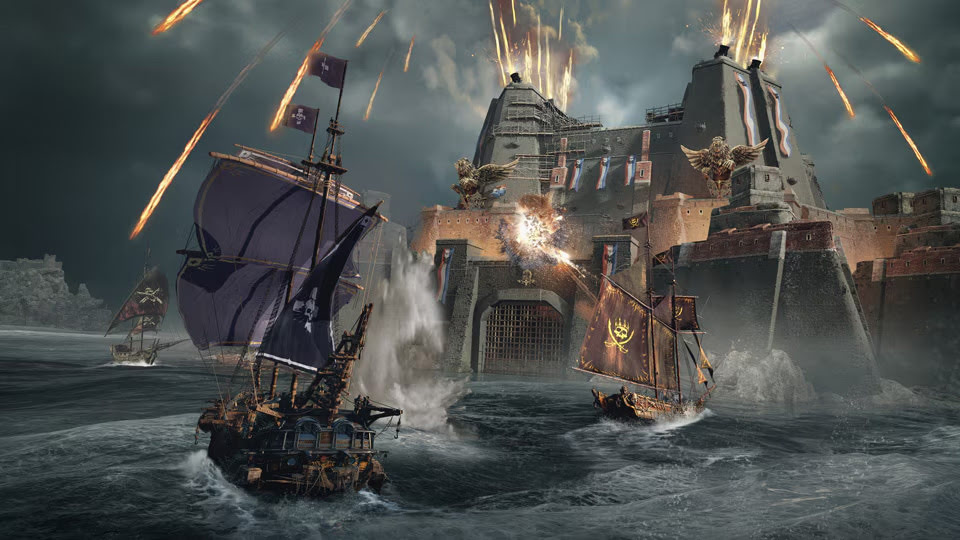
For those completely new to Skull and Bones, it’s best described as a pirate RPG set in a shared open world. You play as a swashbuckling captain who takes on increasingly difficult missions, attacking enemy factions and pillaging their colonies to gain resources and currency which are then used to unlock and upgrade new ships. It’s played in third person and you spend most of your time in naval combat, outwitting your enemies and hitting them with an arsenal of cannons, mortars and other more exotic weapons. As you progress and explore, you’ll discover new activities and landmarks while rubbing shoulders with other pirate players with a number of PvE and PvP opportunities available.
As with any live service RPG, you’ll find yourself involved in a web of menus, although thankfully these aren’t as blatant as those displayed all over your typical free-to-play gacha game. To progress in Skull and Bones, you’ll need to learn what different NPCs have to offer, including vendors who sell blueprints and artisans who transmute your stockpile of resources into equipment, upgrades, ammo, and consumables.
The quantity and variety of items you amass can be overwhelming at first, but you’ll soon learn what resources to focus on, what to sell, what to refine, and what to scavenge. Your ultimate goal is to expand your personal fleet, increasing your flagship’s equipment score in order to access a more diverse and difficult set of challenges, including world events and cooperative activities.
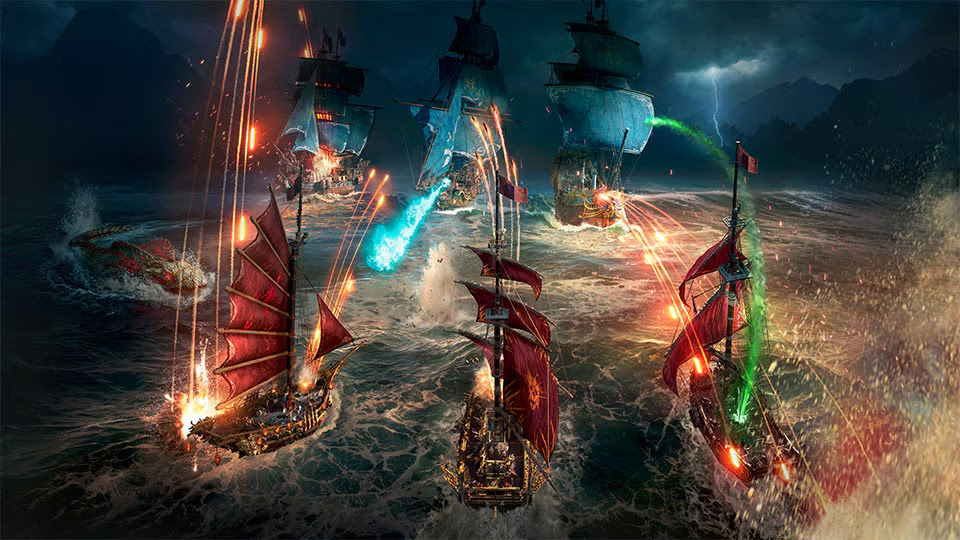
So what does year three hold for new players? At first, there doesn’t seem to be much new content and features aimed at S&B’s saltiest Seadogs, namely the addition of a new endgame Galleon ship and an overhaul of the World Tier system, increasing the difficulty for veterans while offering better rewards. There’s also the new Seasonal Mastery feature, providing a new layer of progression as you unlock buffs and upgrades. However, as the name suggests, these will reset with each new season, although your final ranking will influence your starting position for the next one. Some quality of life improvements benefit everyone with a new, cleaner loading menu for managing your fleet.
While the developers continue to refine what players enjoy about the game, it is far from the ultimate pirate sim. Unfortunately, Ubisoft Singapore abandoned plans for land combat, a feature that could have helped make off-ship gameplay more versatile and meaningful. Skull and Bones also suffers from a common sandbox game problem in terms of story. While the Indian Ocean makes for a beautiful aquatic playground waiting to be plundered, its narrative hooks are dulled by the lack of compelling characters or storylines, leaving players to create their own memorable sagas on the high seas.
Despite these flaws – and the game’s penchant for resource exploitation – it’s still a fun experience to have, especially in multiplayer. Stumbling upon world events and asking other pirates to join you in taking down notorious bounties or colossal sea monsters adds an MMO-like feel, as does the increasing depth of loadout and playstyle options. While Skull and Bones has been heavily discounted on several occasions (it’s also bundled into some PlayStation Plus tiers), the arrival of Year 3 marks an opportune time to jump in, supported by a sizable loyal fan base and plenty of content in the works: 2026 will see the introduction of even larger ships as well as competitive trials, challenging new elite bosses and a treasure trove of smaller upgrades.

